
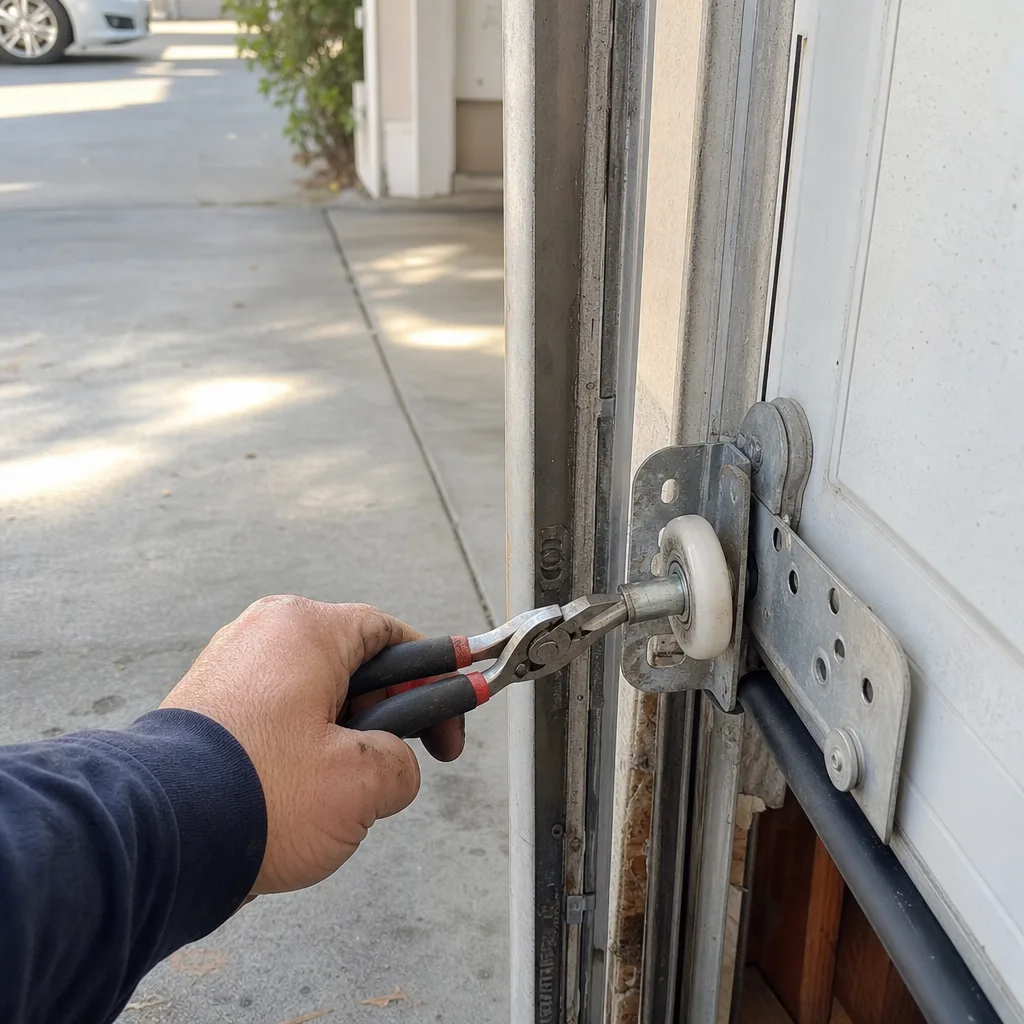
Last updated November 23, 2026
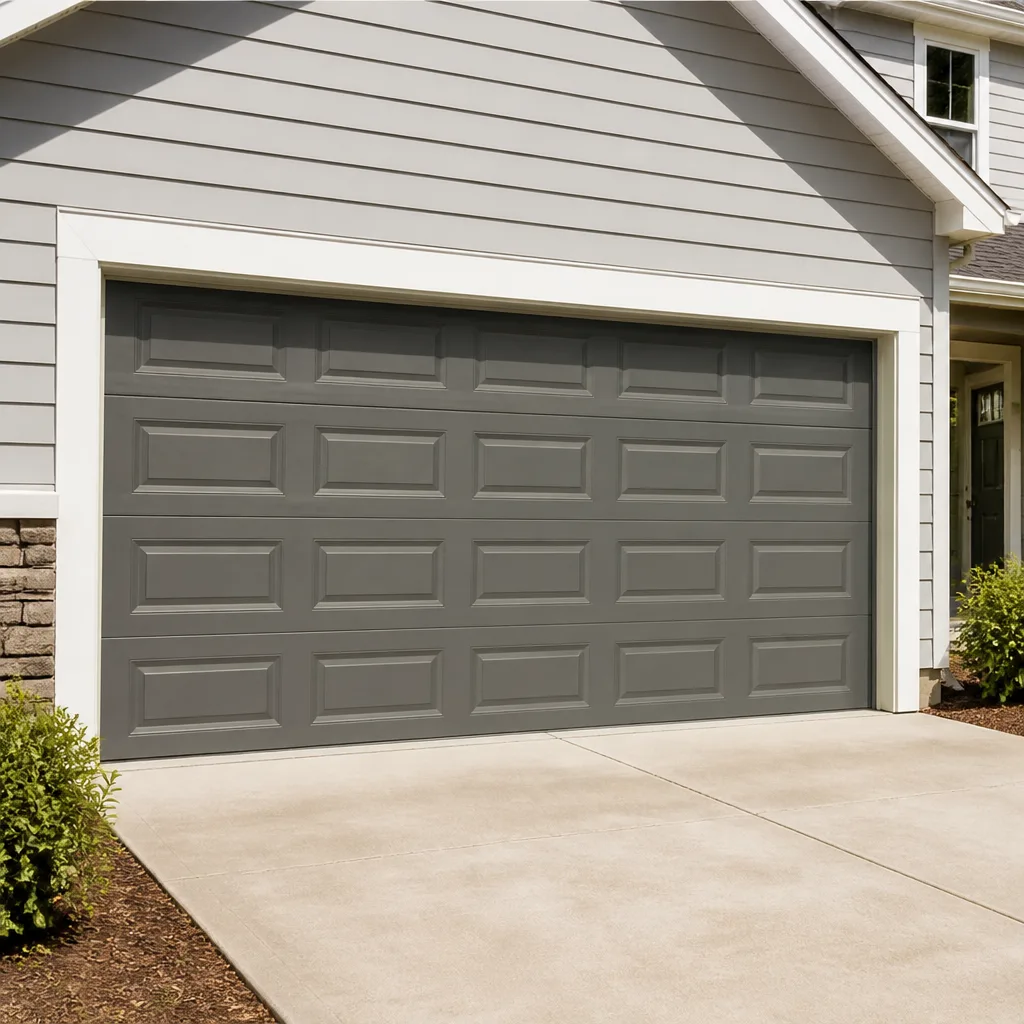 Raised-panel steel
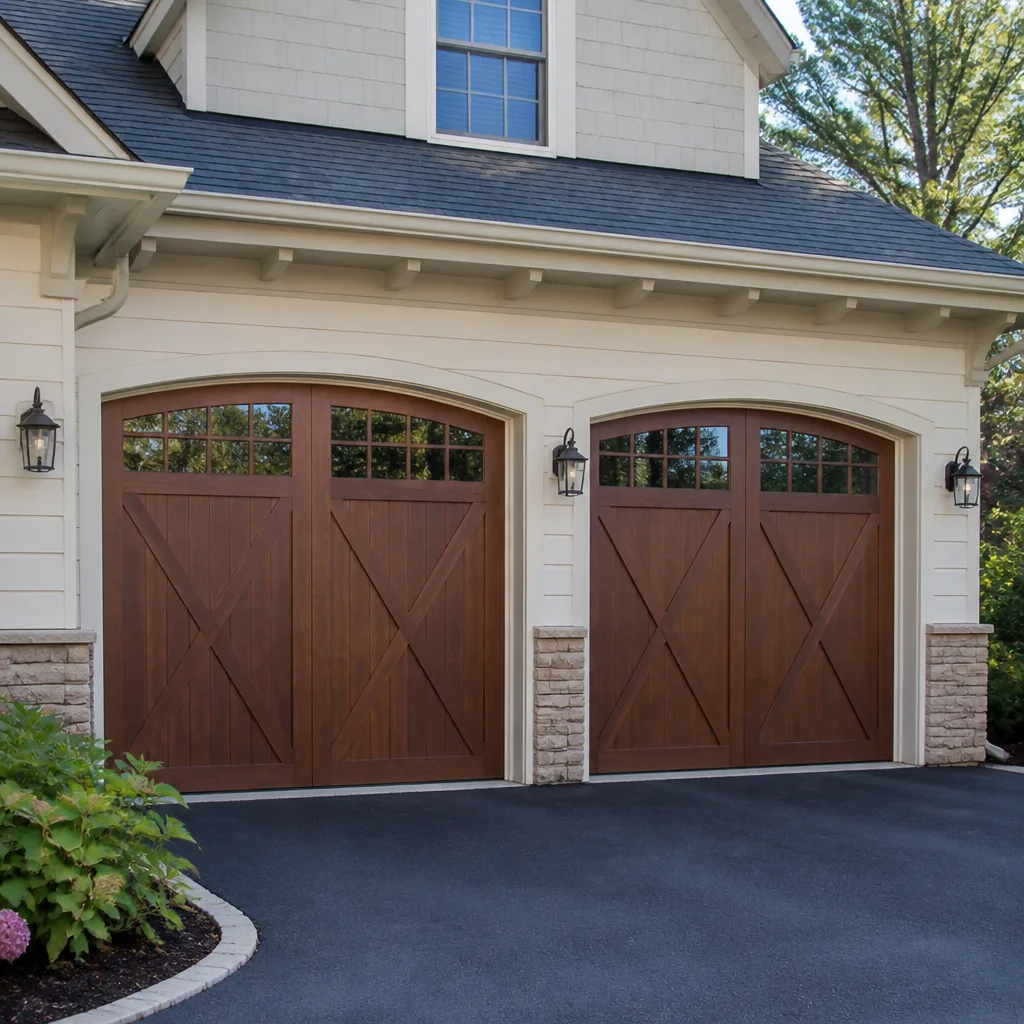 Carriage house
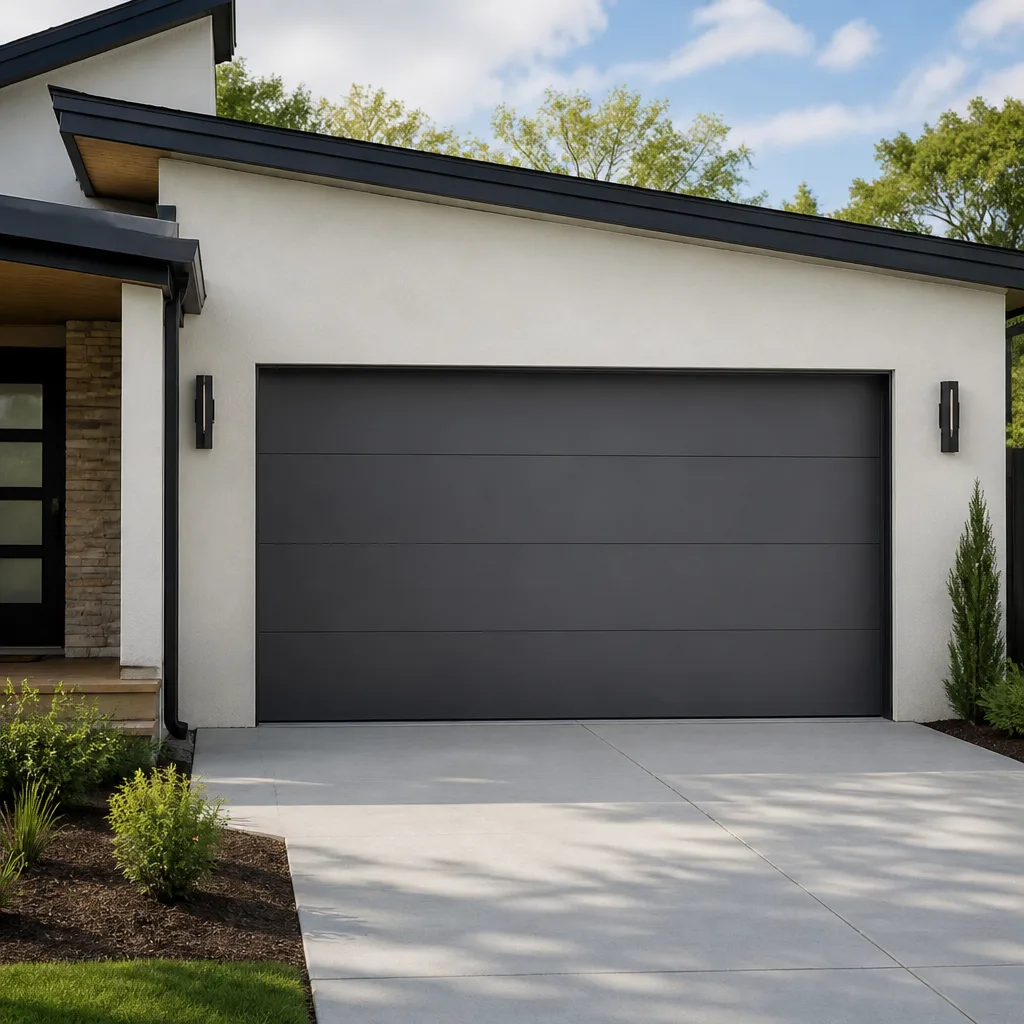 Modern flush
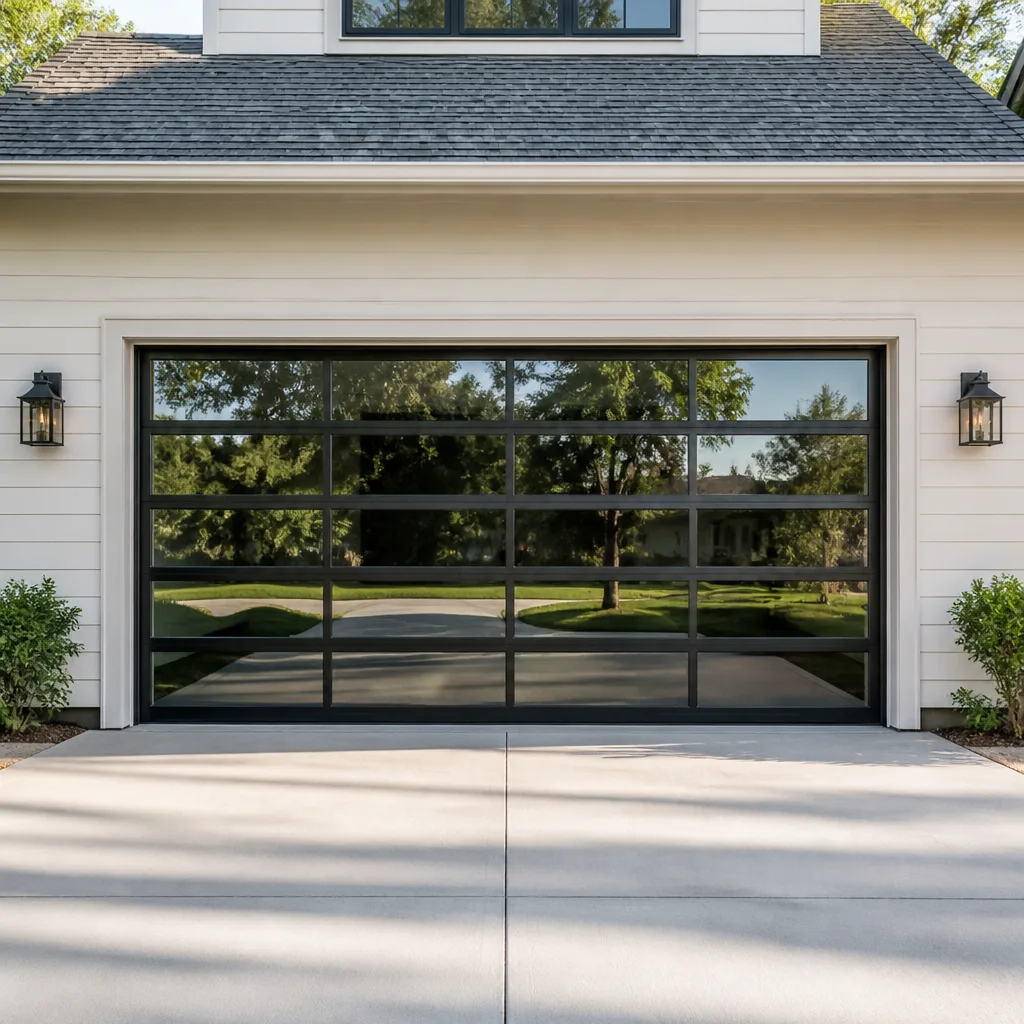 Full-view glass
 LiftMaster openers
 Chamberlain openers
Full 25-point door and opener safety check with every visit - springs, cables, rollers, tracks, and your LiftMaster or Chamberlain opener included
You get a price before we start. It does not change when the pro arrives.
Get your free estimateDIY vs Professional Garage Door: The Bensalem Homeowner’s Decision Guide
A torsion spring under full tension stores enough energy to cause a severe injury in under a second. That’s not a scare tactic, it’s physics. But replacing a bottom weatherstrip seal is a 20-minute job with a $12 part that any homeowner can handle safely on a Sunday afternoon. The problem is that most garage door advice treats the whole category as one thing: either “call a pro for everything” or “DIY it and save a bundle.” Neither is honest.
What follows is a task-by-task breakdown of where that line actually sits for a typical Bensalem homeowner. You’ll learn which jobs are genuinely safe to tackle, which ones need tools most people don’t own, which ones are professional territory no matter how handy you are, and how to tell whether a previous DIY repair is what’s causing the problem you’re facing right now.
Quick Answer
Most garage door repairs fall into one of three tiers. Weatherstripping, sensor alignment, keypad programming, and cleaning or repainting panels are safe for a confident homeowner. Track adjustment, roller swaps, and cable work need specific tools and a second set of hands. Torsion and extension spring replacement, opener motor work, and panel replacement are professional-only jobs because they involve stored energy or structural alignment that can fail dangerously if done wrong. When in doubt, a free estimate from a Bensalem garage door specialist settles the question in one phone call.
Styles & brands we work with
- Raised-panel steel
- Carriage house
- Modern flush
- Full-view glass
- LiftMaster openers
- Chamberlain openers
Table of Contents
- What Actually Determines Whether a Garage Door Job Is DIY-Safe?
- Which Garage Door Jobs Are Genuinely Safe to DIY in Bensalem?
- Why Are Garage Door Springs Professional-Only?
- Can You Repair a Garage Door Opener Yourself?
- When Do Panels and Tracks Need a Professional?
- How Does DIY Work Affect Your Garage Door Warranty?
- How Can You Tell If a Previous DIY Repair Made Things Worse?
- What’s the Real Cost-Benefit of DIY vs Professional in Bensalem?
What Actually Determines Whether a Garage Door Job Is DIY-Safe?
Four factors decide whether a garage door task belongs on your Saturday list or on a technician’s schedule. Skill matters, but it’s third on the list, not first. Most homeowners focus on ability when the real question is exposure.
- Stored energy. Anything holding a door up or pulling it down under tension is in a different category from anything you can unbolt with the door resting on the ground. Torsion springs, extension springs, and the cables they connect to are the highest-risk components on the entire door.
- Tool requirements. Torsion springs need winding bars sized to the spring, not screwdrivers. Tracks need a level and a tolerance for millimeters. Rollers need a ladder and a second person on tall doors. If you don’t own the tool, you’re already past the safe-DIY line.
- Structural alignment. Panels, tracks, and hinges work together as a system. A track bumped out of vertical by a quarter inch will wear rollers, strain the opener, and eventually pop a cable. Getting it back requires understanding how the pieces interact.
- Warranty language. Several major brands, including Clopay and Amarr, condition panel and hardware warranties on professional installation or documented service. Doing certain repairs yourself can void coverage even if the repair succeeds.
Bensalem’s housing stock adds a wrinkle. A lot of homes here have attached garages built decades ago, and the doors on them have been adjusted, re-hung, and sometimes swapped over the years. That means alignment issues are common, and they’re exactly the kind of problem that looks like a simple fix but isn’t. If you’re not sure what shape your door’s hardware is in, it’s worth having someone look before you start wrenching. We handle garage door repair across Bensalem, and most of what we see on older doors started as a small DIY adjustment that went sideways.
Which Garage Door Jobs Are Genuinely Safe to DIY in Bensalem?
A handful of garage door tasks are legitimately homeowner-level, and telling you otherwise would be dishonest. These jobs involve parts that are cheap, replaceable, and don’t hold the door under tension.
Weatherstrip and bottom seal replacement
The rubber seal along the bottom of the door presses into a channel in the bottom aluminum retainer, or slides into a groove on older steel doors. You cut the new seal to length with a utility knife, feed it in, and trim the ends. One person, one ladder, 20 to 30 minutes. It’s the highest-value DIY job on the list because a failed bottom seal lets in cold air, water, and pests, and it’s a $10 to $20 part.
Safety sensor alignment and cleaning
If your door reverses for no reason or won’t close, check the two photo-eye sensors at the bottom of the tracks first. Wipe the lenses, make sure the small LED on each one is lit and steady, and nudge the brackets until the beam lines up. This solves a large share of “door won’t close” calls. If the LED is dead, the sensor or its wiring has failed, and that’s a diagnostic job.
Opener keypad and remote programming
Every major opener brand has a learn button on the motor head and a documented pairing sequence in the manual. Genie and Chamberlain keypads are both straightforward once you have the manual open. Programming a new remote or changing a keypad PIN is a 10-minute job and safely DIY.
Cleaning, lubricating, and painting panels
Wiping down tracks with a rag, lubricating rollers and hinges with a garage door-specific lubricant, and repainting steel panels are all safe homeowner maintenance. Cosmetic work won’t hurt the mechanism. Avoid painting over hinges, rollers, or the bottom seal, and don’t use a heavy grease that attracts dirt to the tracks.
There’s a fifth task that sits right on the line: swapping a single roller. It’s mechanically simple, but you’ll be on a ladder with the door partly open, and one wrong move on the bottom bracket can release cable tension. If you’re not comfortable, skip it. When we do routine work on doors around Bensalem, roller and hinge replacement often comes up because the door has been shifting slightly for years. It’s a quick fix once someone has eyes on it. Our technicians have up to 13 years of experience on this exact kind of small but consequential repair.
Why Are Garage Door Springs Professional-Only?
This is the section that matters most, so read it carefully. A torsion spring is a coiled steel rod holding the full weight of the door under tension. The energy stored in it is real and enormous: it’s the reason a 200-pound sectional door feels like it weighs 15 pounds when you lift it by hand. Any work on that spring requires releasing that stored energy first, and releasing it incorrectly is how people get hurt.
Here’s what we mean when we say it’s not about skill. A skilled DIYer with a good tool collection can learn the theory of spring winding. The problem is that the tools, the tolerances, and the failure modes don’t leave room for a learning curve. Winding bars that slip out of a torsion spring under load can travel with enough force to break bones. A spring that lets go while you’re de-tensioning it delivers its whole load at once. There’s no way to practice your way into this safely on the first or second try.
Extension springs on the sides of older doors have their own set of risks. They’re typically contained by a safety cable threaded through the center, and if that cable is missing, corroded, or installed wrong, a broken extension spring becomes a projectile. When we get called for garage door spring repair in Bensalem, the first thing we check on an extension-spring door is whether the containment cable is present and intact.
The mechanical reason this is professional territory, in plain terms:
- The spring is under constant load even when the door is closed.
- Correct winding requires specific bar sizes and turn counts matched to the spring’s wire diameter and length.
- A mis-wound spring can run the door off its tracks, damage the opener, or fail unpredictably days later.
- Spring lifespan is finite, and a pair should almost always be replaced together because matched springs wear at the same rate.
What a homeowner can do safely: listen to the door. A loud bang from the garage, a door that suddenly feels heavy when lifted by hand, or a visible gap in the spring coil all mean stop lifting the door and call for service. That’s a phone call, not a hardware store trip. Bensalem Garage Door Repair Pros handles this work directly, and if the door is stuck, you can Bensalem Garage Door Repair Pros for same-day help.
Can You Repair a Garage Door Opener Yourself?
Partially. The split runs along a clear line: what’s mounted on the ceiling and wired to your house versus what’s on a circuit board or a motor winding.
Safe opener DIY
- Reprogramming remotes and keypads. Any brand, any model with a learn button. You just need the manual, which most manufacturers publish online.
- Replacing the battery in a remote. Five-minute job with a small screwdriver.
- Reconnecting a disconnected safety sensor. If a sensor wire got snagged and pulled loose from its terminal, reconnecting it is safe as long as the power to the opener is off at the wall switch or breaker.
- Clearing a blocked travel path. If a door reverses because something is in the way of the beam or the door path, moving the obstruction is all it takes.
Professional territory
- Limit switch and force adjustment. These settings determine how hard the opener pushes and how far the door travels. Wrong adjustments make the opener fight the door, strain the motor, and create a safety hazard for anyone underneath.
- Gear and sprocket replacement. A failing opener that grinds or makes a rapid clicking sound usually has a stripped gear. Opening the housing and replacing it requires the right part number for your model.
- Logic board replacement. A board swap looks simple, but the wiring order matters forward and backward, and a wrong connection can destroy the new board.
- Replacing the opener entirely. New installs need the door’s weight and balance matched to the opener’s rated capacity. A stronger opener on an unbalanced door just fails faster.
We handle opener work across the four brands most common in Bensalem garages. If you’re stuck, our garage door opener repair service covers Chamberlain, LiftMaster, Genie, and Craftsman, and we diagnose the actual unit in your garage rather than treating every opener as interchangeable. That matters because a Chamberlain board swap and a Genie gear replacement are different jobs with different parts.
When Do Panels and Tracks Need a Professional?
Panel replacement and track realignment are not DIY-safe, and the reason is geometry, not electricity. A sectional door operates as a coordinated system: panels, hinges, rollers, tracks, and the torsion shaft all have to stay in tolerance for the door to move smoothly. Swap a panel wrong, or bend a vertical track out of true, and the whole system compensates by wearing faster and potentially coming off the track.
What you can safely do to a damaged panel:
- Clean it and repaint it. Cosmetic refinishing is homeowner-level, especially on older steel doors that have chalked or faded.
- Replace a glass pane in a window panel. Individual window inserts slide out of some panel styles and can be replaced without disturbing the door.
- Reconnect a popped hinge pin. If a hinge has slipped but the panel is straight and the door still runs level, reseating the pin is safe.
What needs a professional:
- Any dented or cracked structural panel. A deformed panel binds against the track and puts strain on the roller brackets.
- Bent vertical or horizontal tracks. Track work involves precise alignment, and forcing a bent track back by hand usually makes it worse.
- A door that has come off the track entirely. That’s a two-person job with the door under controlled tension, and a safety setup that homeowner tools can’t replicate.
Panel availability is a real factor here. Clopay and Amarr both make doors that are common on Bensalem homes, and both maintain current and discontinued model support, but you need the right panel spec to get a match. We work with both brands and can source the correct panel instead of guessing at a universal replacement. That’s the kind of thing that saves a homeowner from buying the wrong door section twice.
How Does DIY Work Affect Your Garage Door Warranty?
Warranty language varies by brand and by which part of the door you’re talking about. In practice, most residential door warranties are written to cover defects in materials and workmanship when the door is installed and serviced professionally, and a homeowner repair can shift the coverage.
Here’s what actually happens with common warranties:
- Manufacturer defect vs. damage. A spring that breaks before its rated cycle count is a defect claim; a spring that was over-tensioned during a DIY repair is not. The distinction is usually obvious to an inspector.
- Installation warranty. Panel and hardware warranties typically assume professional installation. If a homeowner installs a panel and the hinge holes crack, the claim is likely to be denied.
- Opener coverage. Chamberlain and Genie both tie parts coverage to their published installation and adjustment procedures. A DIY opener install that skips a balance check can void the motor warranty if it fails under load.
- Cosmetic finish warranties. These usually survive homeowner painting, but can be voided if the door is painted over hinges, seals, or moving parts.
The practical takeaway: before you touch a covered component, look at the model plate on the door or the opener and check the warranty document for that brand. It’s a five-minute read that could save you a claim. Our technicians have up to 13 years of experience working on the eight major brands most homes here use, including LiftMaster, Chamberlain, Genie, Clopay, Amarr, Wayne Dalton, Craftsman, and Raynor, and they can tell you whether what you’re planning is likely to affect coverage before you start.
How Can You Tell If a Previous DIY Repair Made Things Worse?
This comes up more often than you’d think. A door that was “fixed” a few years ago and has been subtly misbehaving ever since usually has a specific fingerprint. Before you call a technician, you can do a five-minute inspection that helps them diagnose faster.
- Lift the door halfway by hand with the opener disconnected. A balanced door stays where you put it. A door that drifts up or down is unbalanced, which usually points to spring tension or a track issue. Don’t force it, just note the direction of drift.
- Look at the spring coils. Even spacing between coils is correct. A compressed or stretched section means the spring was wound unevenly or is failing.
- Check the track alignment at the floor. The two vertical tracks should be parallel to each other and plumb. If one is visibly closer to the door at the bottom than the top, a prior adjustment likely bent it.
- Run your hand along the bottom of the door. Look for a seal that’s been forced in backward, a retainer that’s been bent, or weatherstrip cut too short at the ends.
- Look for missing or loose bolts at the hinges. A DIY roll or hinge swap that used the wrong length bolt weakens the panel around the screw holes.
- Check whether the openers’reversing properly. Put a 2×4 flat on the ground under the door and test the auto-reverse. If the door doesn’t reverse on contact, the force limit was probably adjusted by hand and it needs professional resetting.
Any of these findings is not a crisis, but it does mean you should describe exactly what you found when you call. Even for small jobs, we appreciate it when a homeowner tells us what they’ve checked, because it turns a diagnosis visit into a repair visit. That precision is one of the reasons we offer free estimates on Bensalem Garage Door Repair Pros service calls before any work is scheduled. A call outside dispatch hours gets booked into the next opening, Sunday through Friday, 7am to 7pm.
What’s the Real Cost-Benefit of DIY vs Professional in Bensalem?
The math only works one way for the cheap, safe DIY jobs and the other way for everything else. Here’s how it breaks down by task, using typical local estimates, and remember every price is an estimate, not a final figure.
| Task | Typical DIY path | Typical professional estimate |
|---|---|---|
| Bottom weatherstrip replacement | $10-$20 part, 20-30 minutes | Estimate varies by length and retainer type; call for a quote |
| Safety sensor alignment | $0, 10-15 minutes of adjustment | Included in most repair visits; call for a quote |
| Keypad or remote programming | $0, manual required | Often folded into a larger visit; call for a quote |
| Panel cleaning and repainting | $30-$80 in materials | Cosmetic only; call for a quote |
| Roller and hinge replacement (set) | $25-$60 in parts, needs ladder and patience | Professional install with balance check; call for a quote |
| Opener gear or board replacement | Part cost varies widely by model | Diagnostic plus repair; call for a quote |
| Torsion spring replacement (one spring) | Not recommended at any part cost | Typical estimated range quoted per spring; a matched pair is usually replaced together at roughly double a single spring |
| Track realignment or full panel replacement | Not recommended | Estimate depends on door style and track layout; call for a quote |
The cost-benefit flips hard at the spring line. Even if you could source a spring for a reasonable price, the tools, the risk, and the potential warranty impact make the DIY route a losing trade. On the safe-DIY end, the labor savings are real: 30 minutes of your Sunday replaces a service visit, and that’s completely fine.
For installation and replacement specifically, price depends on door size, style, insulation, and window configuration, and the written quote is the price. We don’t promise same-day on installs because those jobs are measured, ordered, and scheduled. What you get is a free measure and a written estimate before anything is ordered. That’s also why the estimate is quoted and agreed before any work starts on repairs. And no, prices don’t change once we see the door: an estimate is set by what’s written, not by what looks like an emergency.
If you’re in the middle of a project and want a sanity check, calling for a free estimate is faster than researching individual part fits for a two-hour afternoon. The estimate costs nothing and settles the question either way.
Common Mistakes to Avoid
- Trying to wind a torsion spring with screwdrivers instead of winding bars. No screwdriver is sized for the winding cone, and slipping out of a loaded spring is how people end up in the emergency room. There is no safe substitute for the right tool.
- Adjusting the opener force limit upward to force a door that’s binding. This masks the real problem, usually a bad roller or unbalanced spring, and it disables the safety reverse. If the opener can’t lift the door at factory settings, the door needs service, not a stronger push.
- Replacing one spring when the other is the same age. Matched springs wear together, so a lone swap leaves the door out of balance and shortens the new spring’s life. Both springs should be replaced as a pair.
- Painting over hinges, rollers, and the bottom seal. Paint buildup in moving parts binds the door, and painting over the seal makes it stiff and leaky. Mask everything that moves.
- Buying a universal weatherstrip seal without checking the retainer style. Bensalem’s older doors often have aluminum retainers that need a specific profile, and a universal seal that doesn’t seat will pull out in cold weather.
- Pulling a door off the track to inspect it. A sectional door off its track is under uncontrolled tension, and getting it back requires two people and the right technique. Inspect it in place.
- Assuming a loud bang was just the opener. A snapped torsion spring often sounds like a gunshot, and the door will feel suddenly heavy. That’s a call, not a diagnosis you do from inside.
See the difference
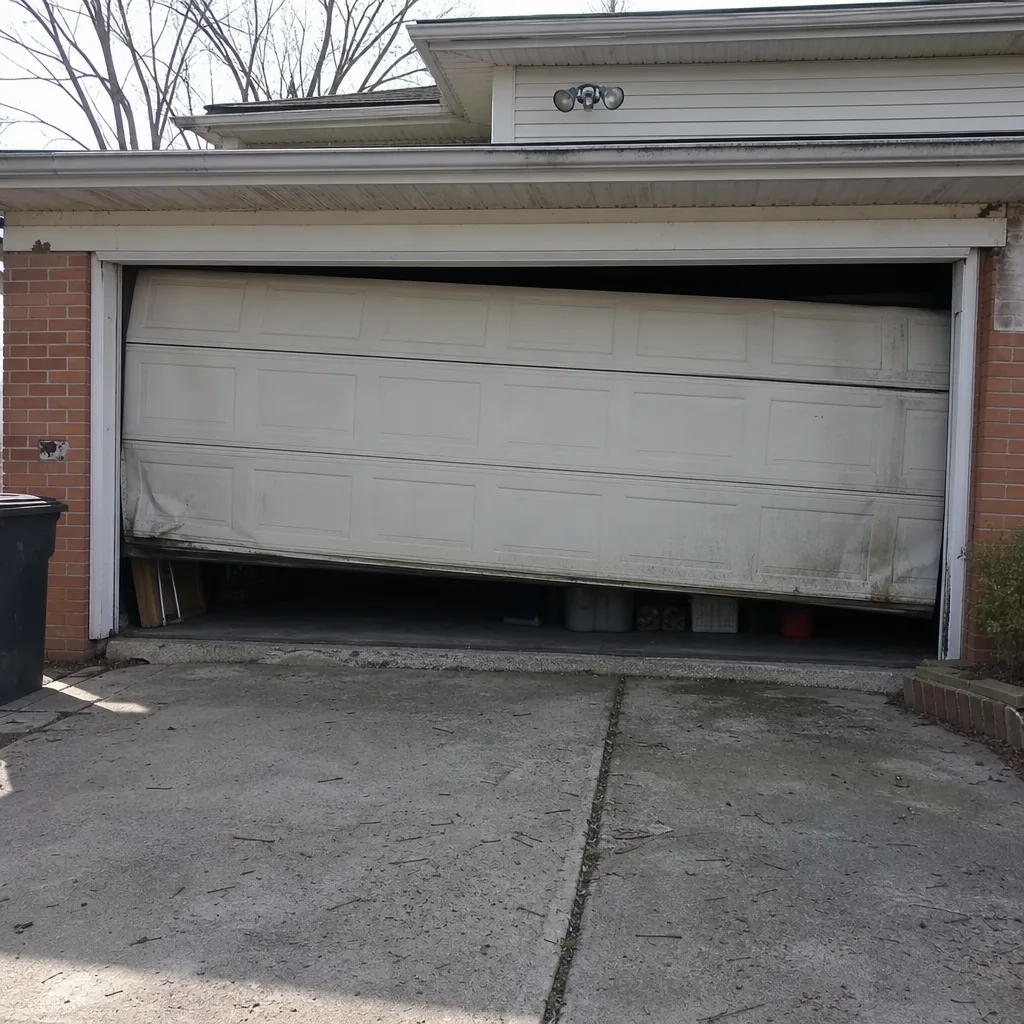 Before
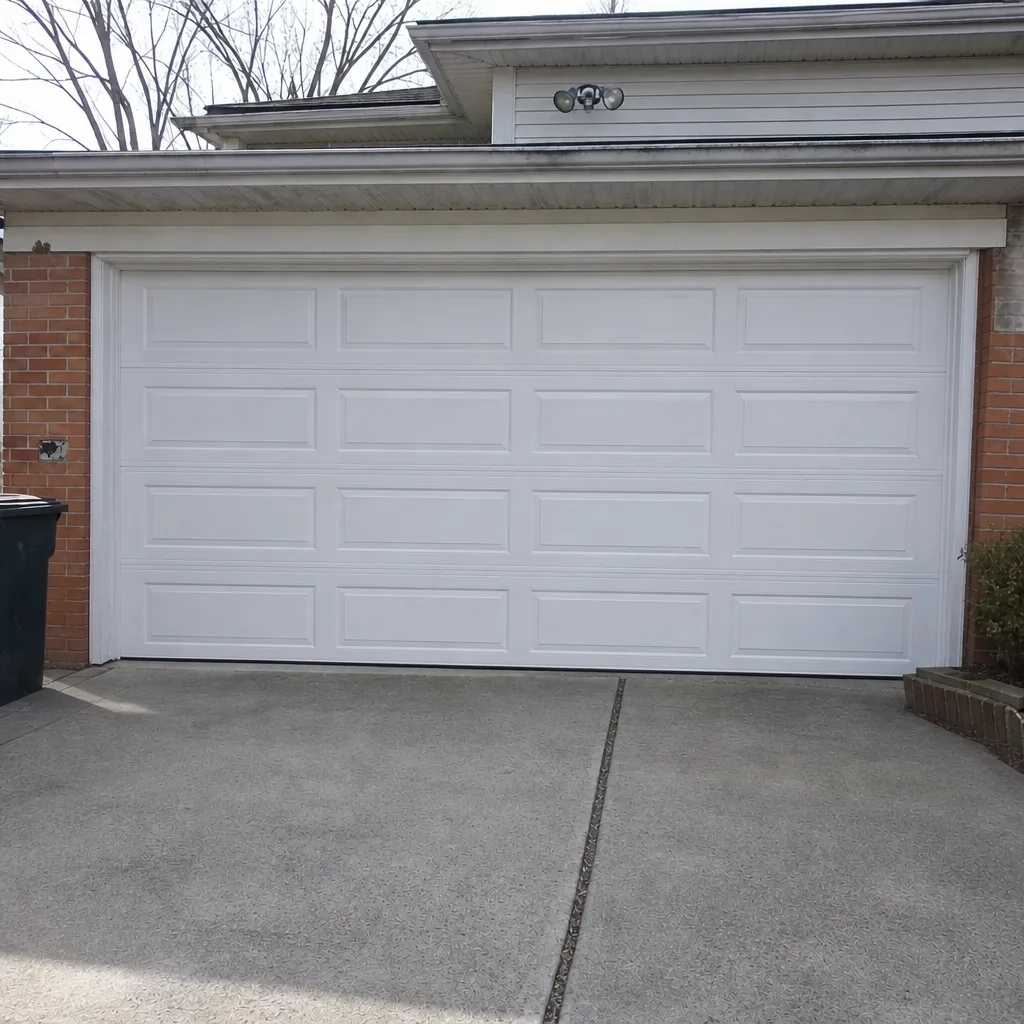 After
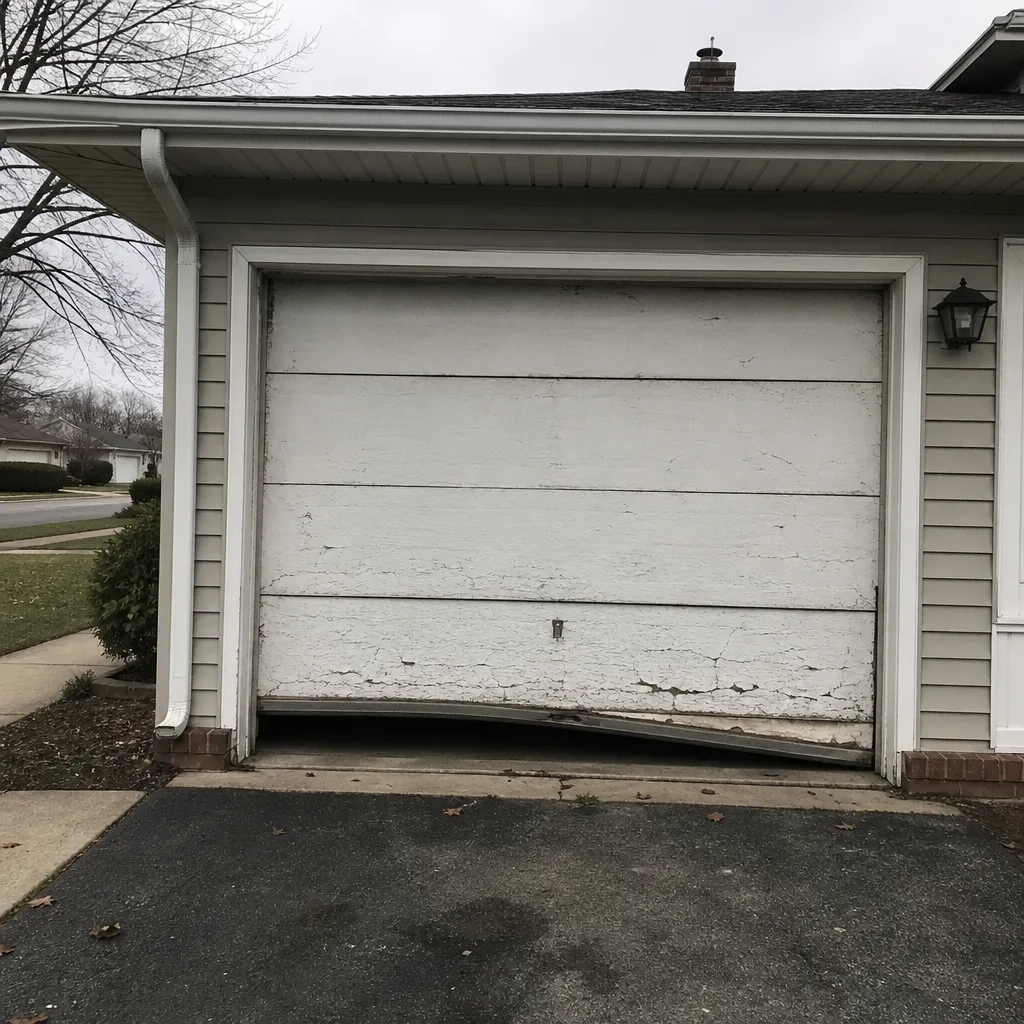 Before
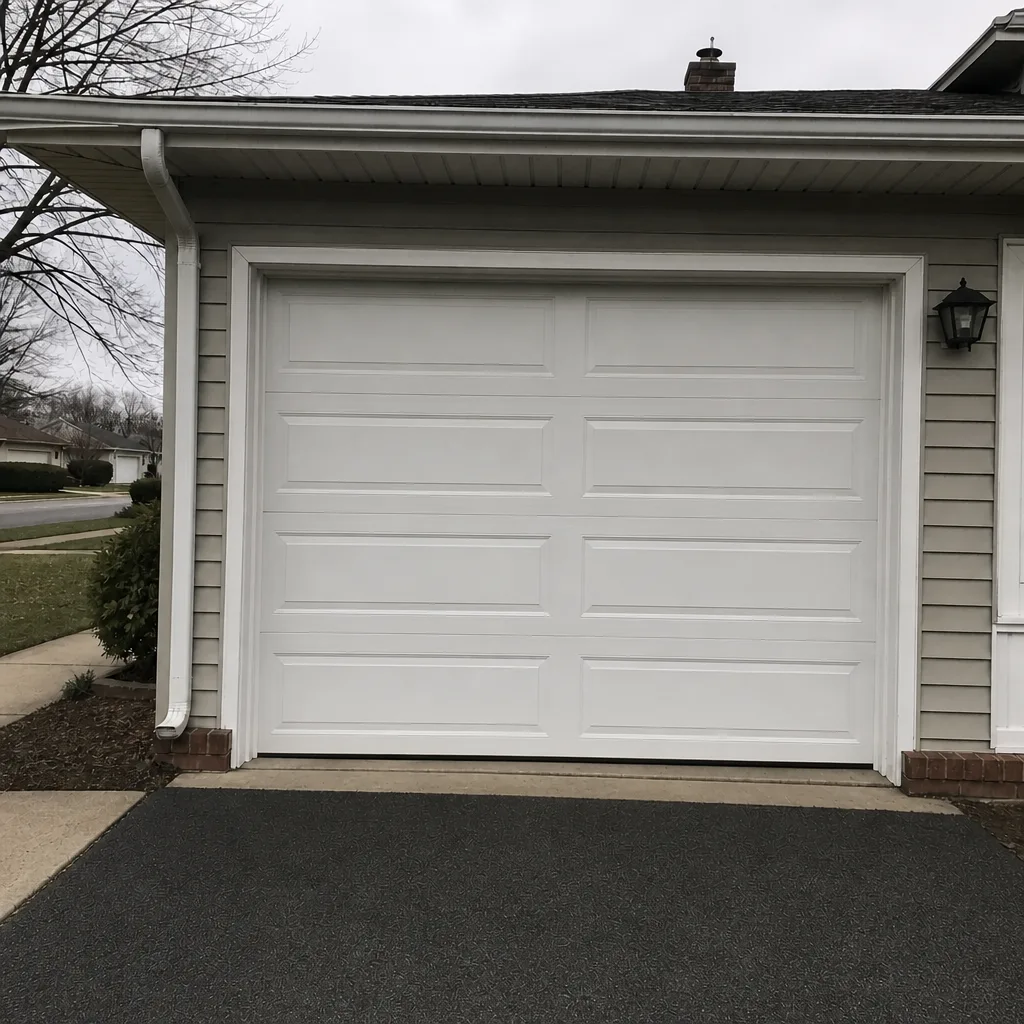 After
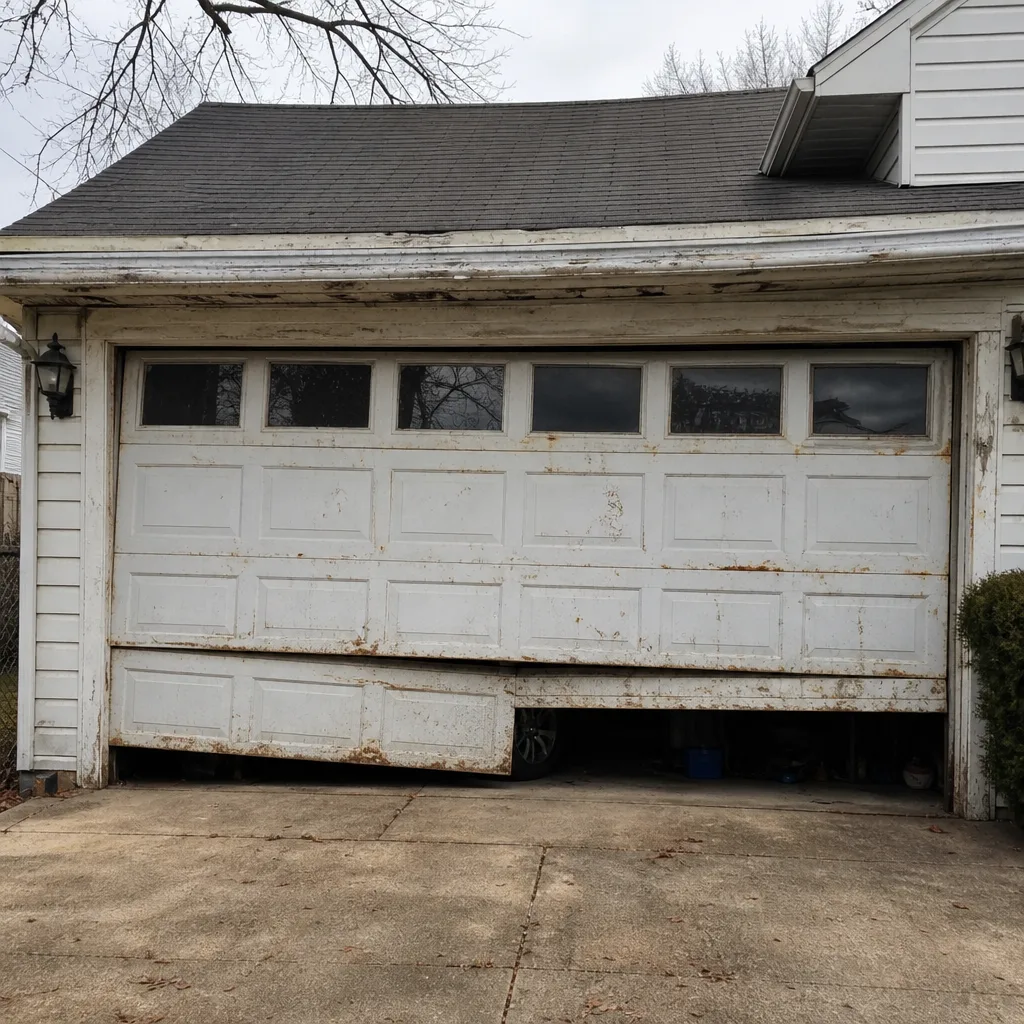 Before
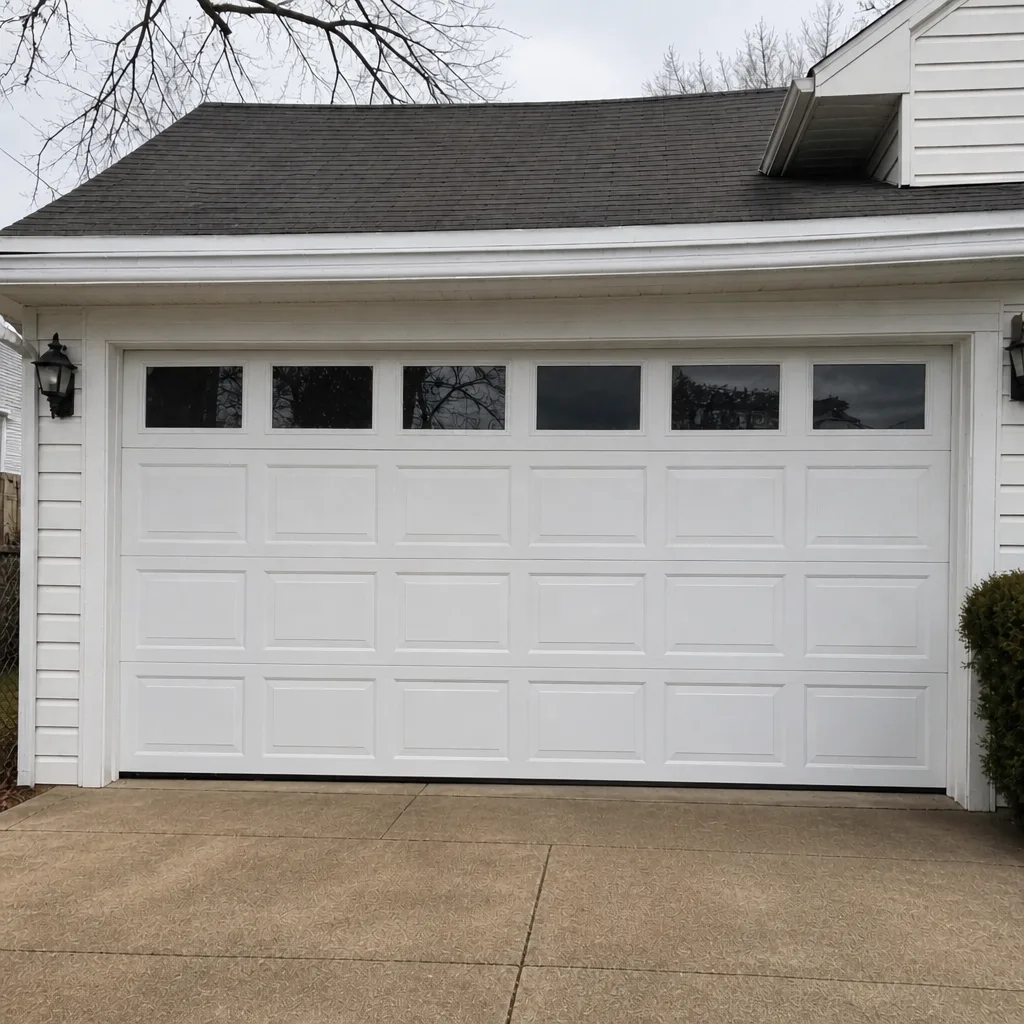 After
When to Call a Professional
Call a professional for any of the following, without trying to “just look first”: a loud bang from the garage with a heavy door, a door that’s come off its track, a spring that’s visibly broken or that won’t hold the door up, an opener that reverses without obstruction or that grinds on travel, any repair that requires the spring or cable to be de-tensioned, and any panel or track damage that affects how the door runs. Those are the four jobs we won’t recommend for any DIYer, regardless of experience. Bensalem Garage Door Repair Pros offers free estimates in Bensalem, covering repair, opener repair, spring repair, and complete new-door installation. You don’t have to call two companies if the answer turns out to be a new door. Call (855) 633-8567. We answer 24/7. Fast dispatch from 7am to 7pm, Sunday through Friday.
Frequently Asked Questions
No, and it’s not a close call. Torsion spring replacement requires releasing and re-winding stored energy that can cause severe injury if the winding bar slips, and the tools are not homeowner-grade substitutes. The safe path is a professional spring replacement, and a matched pair is typically replaced together. Call (855) 633-8567 for an exact quote. Estimates are free.
Spring pricing is quoted per spring, and a pair is usually replaced together at roughly twice a single spring. The written estimate sets the final price, and it’s agreed before any work starts. Call (855) 633-8567 for an exact quote. Estimates are free.
No, and turning up the force limit is one of the most common DIY mistakes we get called to correct. A door that won’t close is usually blocked by a misaligned safety sensor, a binding roller, or an out-of-balance spring, and forcing the opener past it masks the real problem. If the door reverses on its own or stops short, call (855) 633-8567 for a diagnosis. Estimates are free.
Yes. The local professional who performs the work is licensed and insured as their state requires. Our technicians have up to 13 years of experience and are factory-familiar with LiftMaster, Chamberlain, Genie, Clopay, Amarr, Wayne Dalton, Craftsman, and Raynor equipment. Call (855) 633-8567 for an exact quote. Estimates are free.
No. The written quote is the price, and it’s quoted and agreed before any work starts. If the diagnosis changes once the door is open, that’s discussed before anything proceeds. Call (855) 633-8567 to book a free estimate.
Same-day service is available for urgent failures like a snapped spring, a failed opener, or a door that won’t open or close. Call (855) 633-8567. We answer 24/7. Fast dispatch from 7am to 7pm, Sunday through Friday, and a call outside dispatch hours is booked into the next opening.
The Bottom Line
The DIY-vs-pro decision isn’t about how handy you are, it’s about what the task involves. Weatherstripping, sensor alignment, keypad programming, and cosmetic panel work are safe and worth doing yourself. Roller and hinge swaps are doable if you have a ladder and a helper. Springs, cables, opener adjustments, track realignment, and panel replacement are professional territory because of stored energy, alignment tolerances, and warranty implications, not because the work is complicated to understand. If a task involves a spring under tension or a door that’s already off its track, stop and call. For everything else, use your judgment, and know that a free estimate in Bensalem is one phone call away if you want a second opinion before you start.
Call Bensalem Garage Door Repair Pros at (855) 633-8567 for a free estimate. We answer 24/7, with fast dispatch from 7am to 7pm, Sunday through Friday.
Written by the team at Bensalem Garage Door Repair Pros.